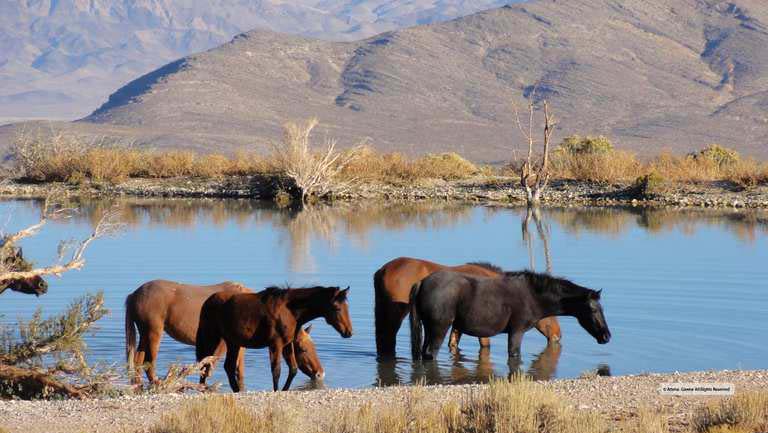
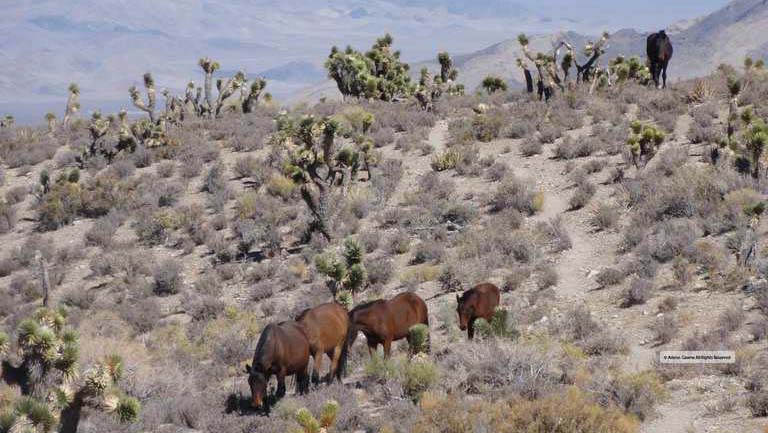
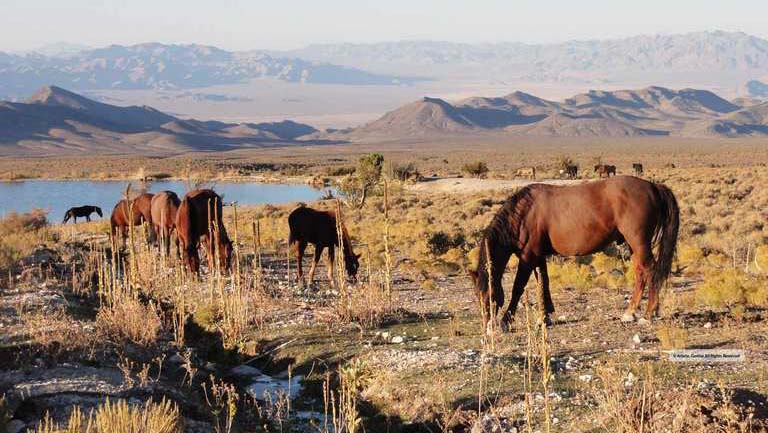
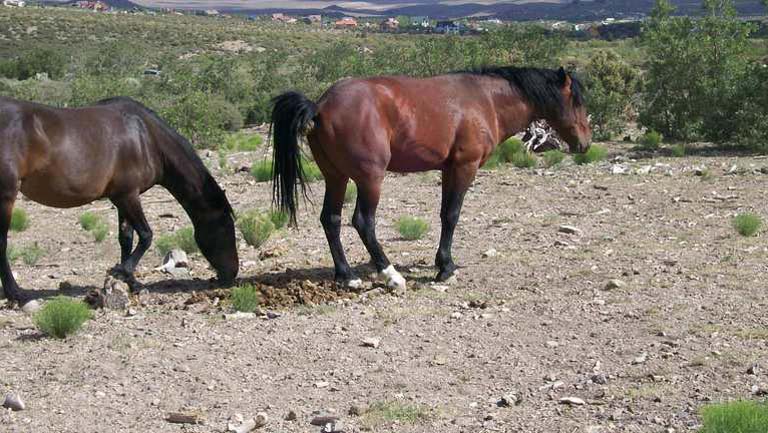
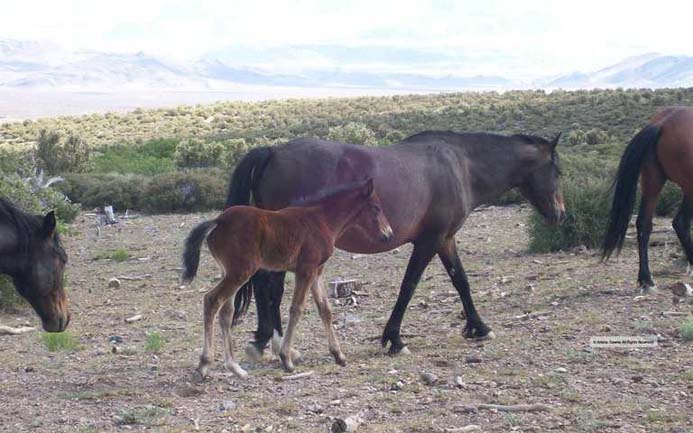
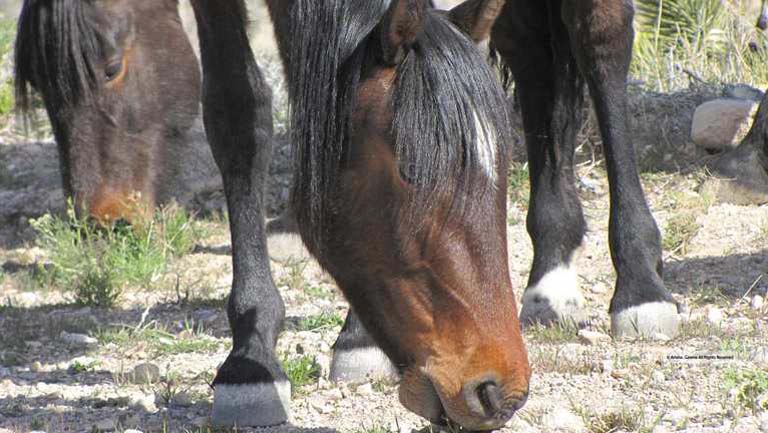
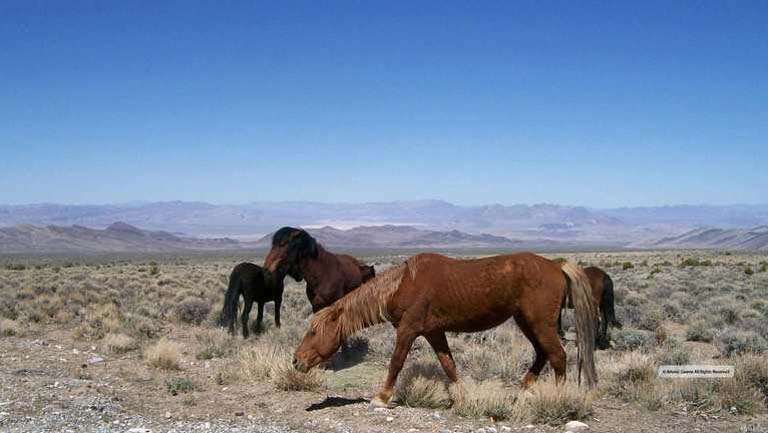
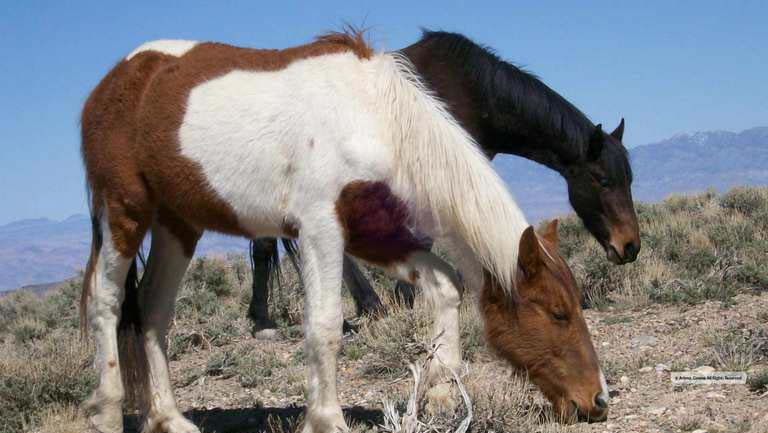
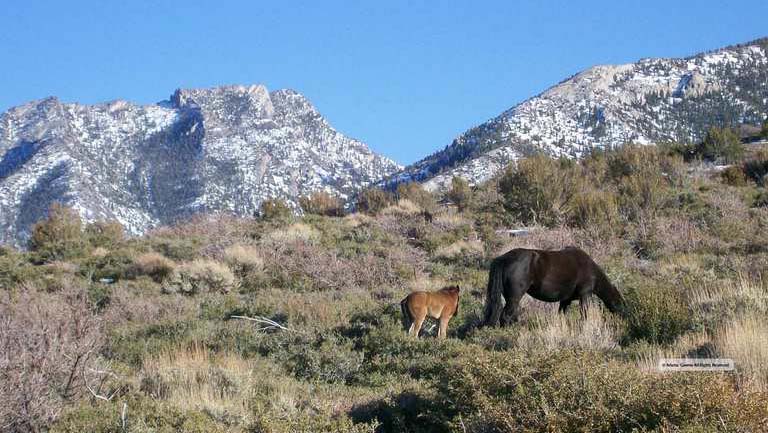
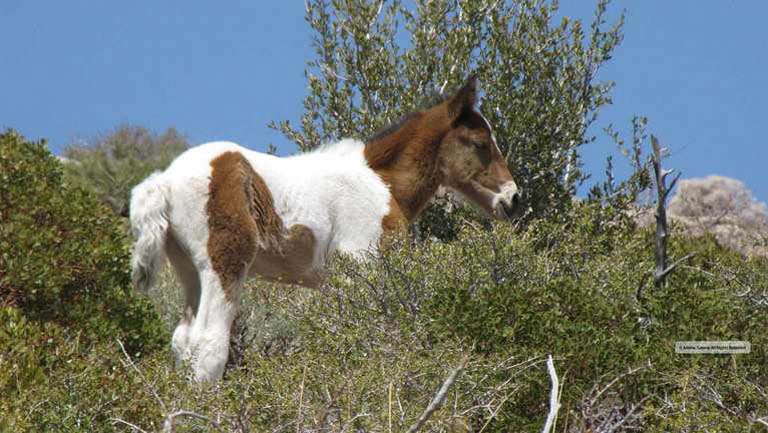

A family band - sometimes called a harem - usually numbers 2 to 4 mares and their offspring. Yearlings and 2-year olds play on the edge of the band but young foals cling close to their mothers.
Each family band has a lead mare, normally the oldest and/or most trusted mare. She choses when and where they move for water, graze or flee from danger.
When you see a family band of mares, foals and a stallion, stay long enough with them to learn their hierarchy - a lead mare normally has highest senority and the shorter the time a mare has been in the band, the less senority she and her foal may have.
If you see a mare flatten its ears back, nip or kick at a younger horse, try to see what she is teaching it. It may need to learn quick obedience or it might fall prey to a hunter. It may be playing too roughly with a younger foal or too close to a cliff edge. Mares have life experience to teach and that gives you superb photographs.
Watch closely when a stallion sniffs fresh horse droppings or urine and then curls back his upper lip. He draws scent molecules across his vomeronasal organ at the roof of his mouth.
All cats, buffalo, antelope, giraffes, llamas and horses do this quick chemical test called flehmen. This tells him how long ago another animal passed by or whether a female is in heat or estrous, meaning she is ready to breed.
A lead stallion may violently "capture" mares from other bands but a mare will leave his band if she dislikes the stallion’s or another band mare’s behavior toward her.
Gentle courtship can sometimes last for days with the stallion following the mare, grooming her and bonding closely.
Dominant bands and dominant mares and stallions usually drink first at water. You may think that’s unfair when all the horses are very thirsty but a family band needs the most experienced horses to survive.
Subordinate horses benefit from their wisdom and protection and they feel safer with a strong leader. Now you are learning to think like a wild horse.